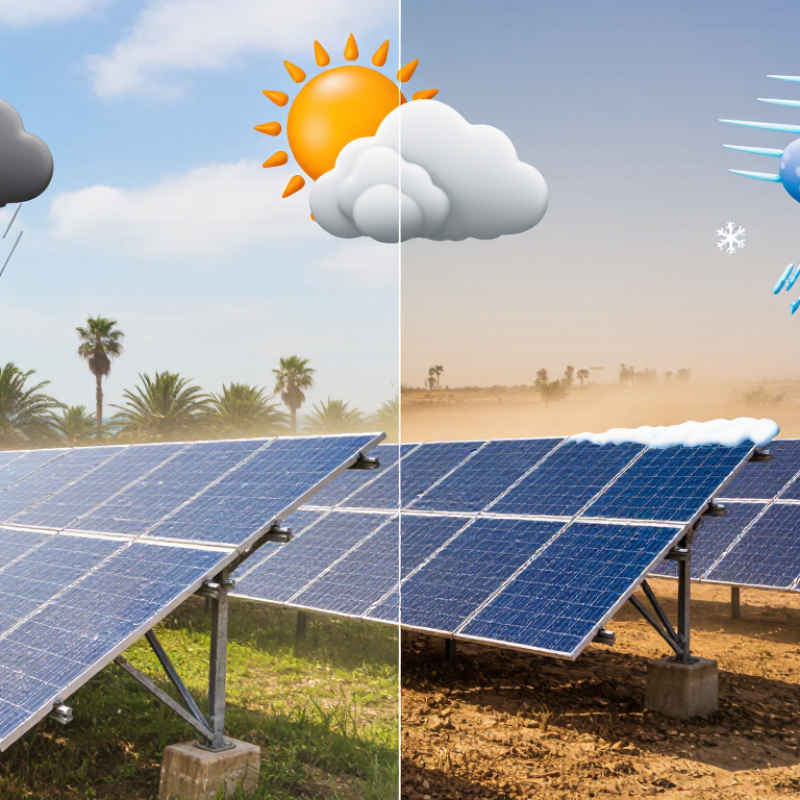
Solar panels made in China are used in climates ranging from humid coastal regions to dry, dusty inland areas. Their performance depends not only on panel design, but also on changing weather and site conditions. How does weather affect solar panel efficiency and cleaning needs? The answer is practical: sunlight, temperature, rain, wind, and snow can each change energy production or the amount of dirt on a panel. A cloudy afternoon may reduce output, while prolonged heat can lower the operating efficiency of many photovoltaic modules. Cold weather alone does not mean poor performance; available sunlight still matters.
Cleaning needs vary just as much. Rain can rinse away loose dust, but it may leave stubborn marks or fail to remove bird droppings and accumulated grime. In dry, windy locations, a thin layer of dust can build up quickly. Coastal air may leave salt deposits, while snow can cover the panel surface until it melts or is safely cleared. Small differences matter. There is no single cleaning schedule that fits every roof or solar farm, and more washing is not automatically better. Water quality, panel instructions, access, and safety should guide maintenance decisions. This guide looks at how weather shapes output and cleaning routines for China’s top solar panels, while keeping expectations grounded. Local monitoring is useful, though a brief drop in generation does not always prove that panels need cleaning. That is easy to overlook.
Solar panel technologies from leading Chinese manufacturers now include PERC, TOPCon, and heterojunction cells. PERC remains widely used, while newer TOPCon designs add a passivated contact layer to reduce energy loss. Heterojunction cells combine crystalline silicon with thin-film layers. Each design balances efficiency, temperature behavior, manufacturing cost, and durability. There is no single winner for every roof.
Many modules also use half-cut cells and multi-busbar connections. These features can reduce electrical losses and help limit the effect of partial shading. Bifacial modules collect light from both sides, but their extra output depends on the surface below them. A pale rooftop may reflect useful light; dark roofing often reflects less.
Glass-glass construction can offer added protection, though weight and installation details matter. Check published temperature coefficients and independent test data, not just headline efficiency. Some product claims are difficult to compare directly. That deserves a closer look.
Tips: Keep panels clear of leaves and heavy dust. Rinse with clean water during cool hours, if safe access is available. Avoid abrasive tools. Cleaning schedules depend on local rainfall, dust, and roof access.
Across China, solar panel performance depends on more than annual sunshine. In northern and inland areas, dry winds can carry dust that settles as a thin, dull film on glass. Rain helps, but unevenly. Short showers may leave muddy spots rather than clean the surface. In the humid south, clouds and frequent rain can reduce sunlight for days, while warm conditions may also lower panel output. Local patterns matter.
Coastal systems face salty air, which can leave deposits and speed wear on exposed hardware. In western highlands, strong sunlight can support good energy production, yet cold nights and snow may interrupt it. Snow often slides off tilted panels, but heavy, wet layers can linger. Temperature changes also stress electrical connections over time. A site’s roof angle, nearby trees, and ventilation can make two installations in the same city behave differently.
Cleaning needs should follow visible soiling and measured output, not a rigid calendar. Check for dust, bird droppings, or blocked drainage after dry spells and storms. Use soft tools and clean water when needed; abrasive brushes can scratch glass. Avoid working on wet or steep roofs. That matters. I would not assume every rainstorm has washed a panel well, and I would not clean one just because it looks slightly dusty. Compare energy records across similar weather periods before deciding.
Solar panel efficiency depends on sunlight, temperature, shading, installation angle, and the condition of the electrical system. Strong midday sun helps, but high cell temperatures can reduce output. On a hot summer roof, panels may feel much warmer than the air around them. Even a narrow shadow from a vent or nearby tree can affect production, depending on the system design. Dust, pollen, and bird droppings also block light, though their impact varies with rainfall and local conditions.
Tips: Check the inverter’s daily output and compare similar sunny days. Look for persistent shade or visible buildup from the ground. Avoid climbing onto the roof; a small inspection is not worth a fall.
Weather and cleaning needs differ across China. Coastal air can leave salt residue, while dry inland areas may collect dust after long periods without rain. Rain helps, but it does not always remove sticky deposits. Clean panels only when needed, using water and soft tools recommended by the installer; abrasive brushes can scratch the surface. No schedule fits every roof. It is easy to blame dirt when output drops, but heat, shade, or an electrical fault may be responsible instead. Track changes over time, and seek qualified help if a drop continues.
Cleaning needs change with climate, not just the calendar. In dry regions, fine dust and windblown sand can form a dull film across glass. After dust storms, inspect panels and compare output with recent clear-day performance. The IEA PVPS Task 13 report Soiling Losses (2022) describes wide variation in soiling losses, with severe locations exceeding 10%. A global average can conceal local problems. Dust is not uniform.
In humid coastal areas, salt and sticky deposits may need more frequent rinsing; use soft tools and follow the system’s care instructions. In cold climates, avoid scraping ice or reaching across slippery roofs. Let snow clear naturally when safe, and arrange professional help for hazardous access. NREL’s Best Practices for Operation and Maintenance of Photovoltaic and Energy Storage Systems recommends tailoring maintenance to site conditions and performance. A calendar alone is a blunt tool. I would not claim one schedule fits every roof: rainfall, nearby roads, tilt, and water access all matter. Record cleaning dates and energy output, then adjust the interval when readings show a persistent drop. Cleaning too often wastes water; waiting too long can leave a quiet loss unnoticed.
Choosing a solar panel by its rated wattage alone can mislead.
In China, a rooftop in dusty northern conditions faces different demands from a humid, typhoon-prone coastal site.
NREL’s PVWatts model uses hourly sunlight, air temperature, and wind data to estimate system output. That is a better starting point than comparing laboratory ratings alone.
Hot modules produce less power, so check the temperature coefficient and allow for airflow beneath rooftop panels.
Cleaning needs vary too.
IEA PVPS Task 13’s review of photovoltaic soiling reports median annual energy losses of roughly 3–4% globally, with substantially higher losses at some dusty sites.
Small differences matter. Dust can settle along the lower frame, while pollen or bird droppings may remain after rain. On a low-pitch roof, runoff may not clear the glass evenly.
Match the panel and mounting system to the actual site: wind exposure, roof direction, shading, salt spray, and access for safe maintenance.
After installation, compare monthly output with local weather and inspect for persistent dirt before setting a cleaning routine.
A fixed schedule may waste water or leave stubborn deposits untouched.
I would also treat estimated yields cautiously; nearby buildings and roof heat can upset neat calculations.
Sunlight, temperature, rain, dust, and wind differ by region. Local roof conditions matter too.
Not always. Short showers may leave muddy spots or dust along the lower frame.
Look for dust, bird droppings, or blocked drainage. Compare output across similar weather periods. Small drops can be hard to interpret.
Inspect them after dusty spells. Use clean water and soft tools when buildup persists.
Salt spray can leave deposits and wear exposed hardware. Check the system’s care instructions.
Cold nights and heavy, wet snow can interrupt production. Snow may slide off tilted panels, but not always.
Check the temperature coefficient and leave room for airflow beneath rooftop panels. Heat can reduce output.
No. Rainfall, roof angle, dust, and water access all matter. Record cleaning dates and energy output, then adjust. A calendar alone is blunt.
China’s leading solar panels use a range of technologies designed to turn sunlight into electricity efficiently, but their real-world output depends on both panel design and local conditions. Temperature, sunlight intensity, cloud cover, humidity, wind, snow, and dust can all affect performance. How does weather affect solar panel efficiency and cleaning needs? High temperatures may reduce output, while dust and prolonged dry spells can block sunlight; rain can wash away some surface dirt, and snow may temporarily cover panels.
Efficiency is also influenced by the quality of materials, installation angle, shading, and ventilation. Cleaning and maintenance should suit the local climate: dusty or coastal sites may need more frequent inspections, while rainy areas may require less routine washing. Choosing panels for a specific site means considering seasonal weather, roof or ground conditions, shading, and practical access for cleaning. Regular checks and careful, appropriate cleaning help maintain reliable energy production over time.

Stuart Solar