7 Tips for Choosing a Reliable Solar Panel Cleaning Machine

Time:2026-09-28 Author:Sienna
0%

Choosing a cleaning machine for a solar array is not just a matter of speed. The wrong brush can leave fine scratches, while poor water control may create streaks across glass modules. A dependable machine should match the panel layout, site conditions, and maintenance routine. That means checking brush material, pressure settings, water use, maneuverability, and access to replacement parts before comparing prices.

“How to choose a reliable solar panel cleaning machine” starts with a close look at the work itself. A rooftop array with narrow walkways needs different equipment from a long ground-mounted site. Dust, pollen, bird droppings, and hard-water residue also call for practical testing, not impressive claims alone. Solar O&M specialist Elena Morris puts it this way: “A good cleaning machine protects the panel first; speed comes second.” Use that principle when assessing machines, and ask suppliers to demonstrate them on a comparable surface.

Small details matter. Can the operator adjust brush pressure? Does the machine turn without dragging hoses across glass? Are filters easy to inspect after a dusty shift? These questions reveal more than a polished brochure. Still, no checklist guarantees a perfect choice. Site access, operator training, and upkeep can change results, and buyers sometimes underestimate those factors. This guide’s seven tips will help you compare equipment with clearer criteria, spot weak claims, and choose a machine suited to real operating conditions.
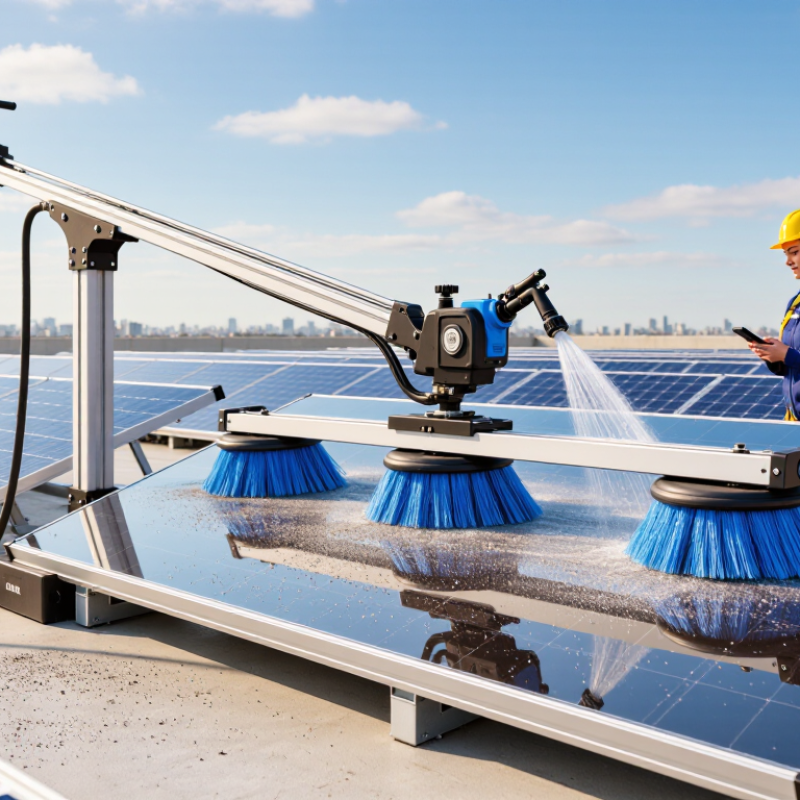
7 Tips for Choosing a Reliable Solar Panel Cleaning Machine

Assess Your Solar Array and Site Conditions

Assessing the array and its surroundings is the first step toward choosing a suitable cleaning machine. Note panel tilt, row spacing, module height, and access routes. A machine that fits one row may not clear a narrow aisle or uneven ground. Check for fragile cable runs, drainage channels, and rooftop edges before comparing equipment.

Local soiling matters as much as array size. NREL’s 2017 review, “A Review of Photovoltaic Soiling,” estimated average energy losses of roughly 3–4% globally, with much higher losses possible in dusty locations. Record what settles on the modules: fine dust, pollen, bird droppings, or agricultural residue may need different brush action and cleaning intervals. Water availability and wind exposure matter, too. Small details count.

Tip: Walk the site after a dry, windy day. Photograph deposits across several rows, then note slopes, gaps, and obstacles. Use those observations to check the machine’s reach, turning space, brush pressure, and water needs. A rushed visual estimate can miss a low cable or a tight corner; honestly, site notes are not always complete, so verify dimensions before purchase.

Compare Machine Types, Reach, and Cleaning Methods

Choosing a cleaning machine starts with the array, not the catalog photo. For compact rooftops, a lightweight, hand-guided unit may maneuver more easily around vents and rails. Large, open arrays can suit vehicle-mounted or autonomous machines, but only when row spacing and turning areas match their dimensions. A machine that cannot reach the far edge safely is not a bargain.

Measure panel height, slope, aisle width, and access points before comparing reach. Telescopic poles can handle moderate heights from the ground; taller or awkward sections may require an elevated platform. Check hose and cable lengths, too. A few extra meters matter when the water connection sits behind the building. Brush systems loosen dry dust, while water-fed soft brushes rinse away fine residue. Air-based cleaning reduces water use, though it may struggle with sticky deposits.

Ask how the machine controls pressure and protects glass edges, frames, and seals. Soft bristles and adjustable flow help, but they are not guarantees; follow the panel maker’s care guidance. Test a small section and inspect for streaks or trapped grit. It takes time. Compare water demand, battery runtime, and maintenance access as well. Filters clog. A powerful machine may still be a poor fit if setup is slow or operators cannot monitor its path. Site conditions change, and a specification sheet cannot reveal every obstacle.

Check Cleaning Performance and Panel-Safe Features

A reliable solar panel cleaning machine should remove dust, pollen, and bird droppings without leaving streaks. Check whether its brushes cover the panel evenly and whether water flow can be adjusted. Too little water may drag grit across the glass. Too much can waste water and slow the job. Ask for performance details under conditions similar to your site, including panel tilt and common debris.

Tip: Check panel-safe features before comparing speed. Soft, non-abrasive brush material, controlled contact pressure, and stable movement help reduce scratching risk. Look for sensors or safeguards that stop the machine when it meets an obstacle. Review the panel maker’s cleaning guidance, too; a machine’s “gentle” setting may not suit every coating. Small details matter.

If possible, observe a demonstration on a comparable panel and inspect the surface afterward in angled light. Check for missed strips, residue, and visible marks. A clean-looking panel is not proof of safe contact. Ask how the machine handles panel edges, cables, and uneven rows, then confirm routine maintenance needs. Brush wear is easy to overlook. Even a promising machine may need careful adjustment on your site, so allow time for a supervised trial before regular use.

7 Tips for Choosing a Reliable Solar Panel Cleaning Machine

Check cleaning performance and panel-safe features before comparing machines.

Use these suggested weights as a 100-point evaluation framework: prioritize cleaning effectiveness and panel-safe contact features. The weights are a decision-making guide, not measured market data or a universal industry standard. Assess each machine using documented specifications and, where possible, a supervised cleaning test.

Review Durability, Maintenance, and Operating Costs

A reliable solar panel cleaning machine must handle more than a showroom test. Check frame materials, sealed electrical components, brush wear, and battery performance after repeated wet, dusty runs. Test it on the actual array: a sloped panel, narrow access lane, and cable snag can expose weaknesses quickly. IEA PVPS Task 13’s 2022 soiling report estimates that dirt reduces global photovoltaic energy yield by roughly 3–4% on average. Local conditions vary, so a machine’s cleaning results should be measured against site readings, not appearance alone.

A clean-looking panel is not always a productive one.

Maintenance can quietly raise operating costs. Ask how often brushes, filters, seals, and batteries need inspection or replacement, and whether routine service requires special tools. Keep a simple log of labor time, water use, repairs, and energy recovered after cleaning. NREL’s photovoltaic operations and maintenance best-practices guide stresses preventive maintenance and performance monitoring; those records help reveal whether a machine is saving more than it costs.

Compare total ownership costs, not just the purchase price. Include downtime, replacement parts, operator training, and water handling.

I would still leave room for uncertainty: dust, pollen, and bird residue behave differently, and no single cleaning schedule fits every site.

Verify Ease of Use, Warranty, and Supplier Support

Tip: Test the controls before comparing cleaning speed. A practical machine should be easy to steer, adjust, and rinse without repeated instructions. Check handle reach, wheel movement, and access to the water connection. Ask for a live demonstration using a panel-like surface. Small controls matter. If setup takes several tools or feels awkward, daily work may become tiring. I would still inspect the manual; a neat demo does not show every real-world snag.

Tip: Read the warranty in detail, not just its duration. Confirm which parts are covered, how wear is assessed, and who pays for shipping or labor. Ask whether brushes, hoses, batteries, or other consumables are excluded. Keep the written terms with your purchase records. A long warranty sounds reassuring, but unclear exclusions can weaken its value.

Tip: Check supplier support before placing an order. Ask how to reach technical staff, what spare parts are stocked, and how quickly routine questions receive a reply. Request clear maintenance steps and troubleshooting guidance. Specific answers are useful. Vague promises are not. Save the contact details and response in writing. Support quality can be hard to judge in advance, so allow for some uncertainty and verify important claims yourself.

FAQS

What should a solar panel cleaning machine remove?

It should clear dust, pollen, and bird residue without leaving streaks. Check for missed strips.

How can I reduce the risk of scratching panels?

Look for soft, non-abrasive brushes and controlled contact pressure. “Gentle” may not suit every coating.

How do I check cleaning results?

Inspect a comparable panel in angled light for residue, missed areas, and visible marks. A clean look proves little.

What site conditions should a demonstration include?

Ask for a trial on similar panel tilts, narrow access lanes, and common debris. Watch how it handles cables and edges.

How much water should the machine use?

Water flow should be adjustable. Too little may drag grit; too much wastes water and slows cleaning.

What maintenance needs should I ask about?

Check inspection and replacement intervals for brushes, filters, seals, and batteries. Ask whether special tools are needed.

How can I judge long-term operating costs?

Track labor, water, repairs, downtime, and energy recovered after cleaning. Purchase price alone can mislead.

How often should panels be cleaned?

It depends on local dust, pollen, and bird residue. I would still double-check the schedule against site readings.

Conclusion

How to choose a reliable solar panel cleaning machine starts with understanding your solar array and its surroundings. Consider the number and layout of panels, roof or ground access, panel height, local dust levels, water availability, and site conditions. Compare machine types, reach, and cleaning methods to find an option that suits the installation and can cover the array efficiently. Look for consistent cleaning performance and panel-safe features, such as controlled contact and materials designed to reduce the risk of scratches or damage.

Before deciding, review durability, maintenance needs, and total operating costs, including labor, water, power, and replacement parts. A practical machine should be straightforward to operate, maintain, and store. Check the warranty terms and the supplier’s support for setup, troubleshooting, and parts availability. Matching these factors to the site’s needs helps ensure reliable cleaning while protecting panels and keeping long-term upkeep manageable.

Sienna

Sienna

Sienna is a skilled marketing professional with a deep expertise in our company’s core products and services. With a passion for innovation and detail, she plays a pivotal role in crafting insightful blog posts that not only highlight the unique features of our offerings but also provide valuable......