How to Choose Between On Grid and Off Grid Solar Inverters?

Time:2026-05-05 Author:Madeline
0%

Choosing the right solar inverter is crucial for optimizing your energy system. Many homeowners are torn between two popular options: on-grid and off-grid solar inverters. These devices play a pivotal role in converting solar energy into usable electricity. According to a report by the International Energy Agency (IEA), global solar capacity reached 1,000 GW in 2021, showcasing the growing demand for efficient solar technologies.

Understanding how to choose between on-grid and off-grid solar inverters involves analyzing your energy needs and lifestyle. On-grid systems connect to the utility grid, allowing users to sell excess electricity back. Conversely, off-grid systems operate independently, ideal for remote locations. This choice can significantly impact installation costs, maintenance, and energy reliability. The Global Solar Council estimates that more than 80% of new solar installations are on-grid, reflecting a trend toward utility-connected solutions.

As you ponder how to choose between on-grid and off-grid solar inverters, consider your goals. Each option has distinct advantages and challenges. While an on-grid system can reduce electricity bills, off-grid setups offer autonomy. It’s essential to evaluate local regulations, energy usage patterns, and financial incentives for solar investments. Making an informed choice can boost energy efficiency and sustainability in your household.
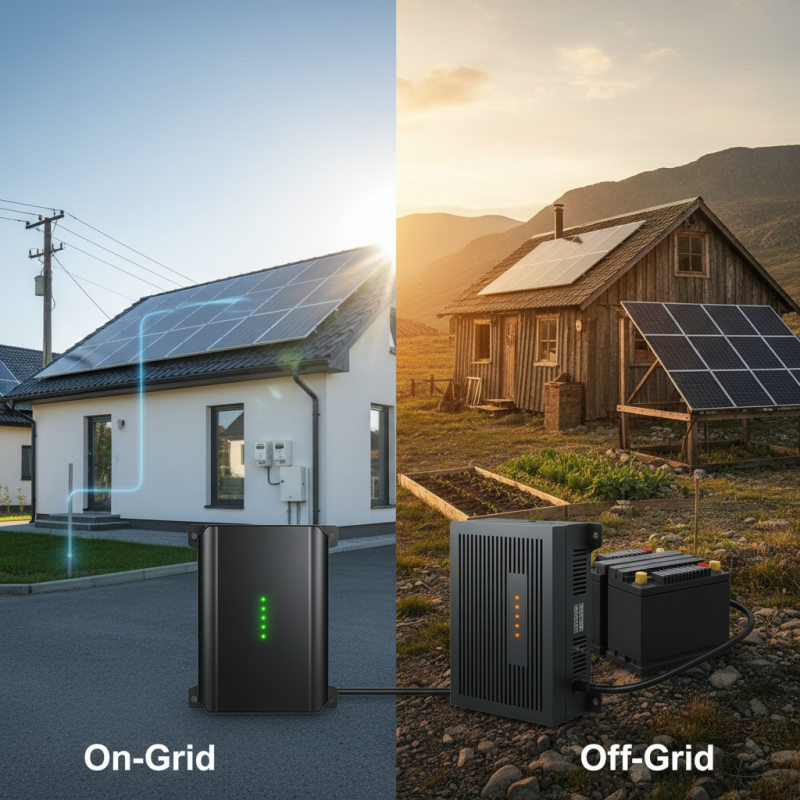
How to Choose Between On Grid and Off Grid Solar Inverters?

Understanding On Grid and Off Grid Solar Inverters

When considering solar inverters, it’s important to understand the difference between on-grid and off-grid systems. On-grid inverters connect directly to the utility grid. They allow you to use solar power during the day while selling excess energy back to the grid. This can significantly reduce electricity bills. However, it’s necessary to have a reliable grid connection for this to function effectively.

On the other hand, off-grid inverters operate independently of the utility network. They store energy in batteries for use during the night or cloudy days. This setup is crucial for remote areas where grid access is limited. Yet, the initial investment is usually higher due to battery costs. Managing energy use becomes more critical in this scenario. Observing your consumption patterns helps optimize storage and usage.

Both systems have advantages and disadvantages. On-grid systems are often less costly and easier to maintain. However, off-grid systems provide energy independence. When choosing between them, reflect on your energy needs and location. Each option comes with trade-offs that warrant careful consideration.

Key Differences Between On Grid and Off Grid Systems

When deciding between on-grid and off-grid solar inverters, it’s essential to understand their key differences. On-grid systems are connected to the main power grid. They allow you to use solar energy during the day and draw electricity from the grid at night. This connection can provide extra benefits, such as net metering. With net metering, users receive credits for excess energy fed back into the grid.

Off-grid systems operate independently of the utility grid. They use batteries to store energy for nighttime use or cloudy days. This means higher upfront costs due to battery installations. However, off-grid systems offer complete energy independence. They can be ideal for rural areas with limited grid access.

Tips for choosing the right system: Consider your energy needs. Calculate your average electricity usage before deciding. Think about your location. Areas with more sunlight may benefit from solar more than others. Always seek professional advice to ensure optimal installation and performance. Your choice should align with your lifestyle and sustainability goals.

Comparison of On Grid and Off Grid Solar Inverters

This chart compares key metrics between on-grid and off-grid solar inverters, highlighting differences in installation costs, maintenance costs, battery storage capacity, energy independence, and grid connection requirements.

Factors to Consider When Choosing a Solar Inverter

Choosing the right solar inverter is critical for any solar energy system. On-grid and off-grid inverters serve different needs. Understanding your energy requirements is essential before making a decision. Evaluate whether you want to rely on grid power or seek energy independence. Your living situation also plays a role; urban settings often benefit from on-grid systems.

**Tips:** Assess your energy consumption over a week. This gives a clearer picture of your needs. Also, consider your future energy demands and lifestyle changes, like adding new appliances or electric vehicles.

Battery storage is another vital factor. If you choose an off-grid inverter, investing in quality batteries ensures reliability during low sunlight periods. On-grid systems typically don’t require batteries, but being without backup can be risky. Think about how much power you can comfortably store.

Lastly, consider local regulations and incentives. Some regions offer tax credits or rebates for solar installations. These can impact your overall investment. It’s worth exploring your options to maximize savings while ensuring sustainability.

How to Choose Between On Grid and Off Grid Solar Inverters? - Factors to Consider When Choosing a Solar Inverter

Factor On Grid Inverter Off Grid Inverter
Cost Generally lower initial cost due to fewer components. Higher initial investment due to battery storage systems.
Energy Independence Dependent on the grid; less energy independence. Complete energy independence; suitable for remote areas.
Maintenance Lower maintenance; less complex system. Higher maintenance due to battery upkeep.
Backup Power No backup power during grid outages. Can provide backup power during outages.
Installation Complexity Simpler installation; connects directly to the grid. More complex installation due to battery integration.
Grid Connectivity Requires a functional grid connection. No grid connection required; can work autonomously.

Benefits and Drawbacks of On Grid and Off Grid Inverters

When choosing between on-grid and off-grid solar inverters, it’s essential to weigh their benefits and drawbacks. On-grid systems connect to the utility grid. This connection allows users to sell excess energy back to the grid. According to the National Renewable Energy Laboratory, homeowners can receive credits that offset their electricity bills. Lower initial installation costs and easier maintenance are compelling advantages. However, these systems lack independence during grid outages, leaving homes without power.

Off-grid solar inverters, on the other hand, provide energy autonomy. They are preferred in remote areas where grid access is limited. A report from the International Renewable Energy Agency indicates that off-grid systems are crucial for rural electrification. These systems require larger battery banks, adding to the costs. Energy storage can present challenges, including limited lifespan and capacity. Users have to be more mindful about energy consumption, as they cannot always draw power from the grid. In summation, both types have distinct advantages and challenges that should be considered closely.

Cost Considerations and Financial Incentives for Each Type

When considering solar inverters, cost is a crucial factor. On-grid systems generally exhibit lower upfront costs. According to the National Renewable Energy Laboratory (NREL), the average installation cost for an on-grid solar system is around $3,000 to $4,000 per installed kilowatt. This option takes advantage of net metering, allowing homeowners to sell excess power back to the grid. It provides a quick payback period, often within 5 to 7 years.

In contrast, off-grid systems are more expensive but offer different benefits. The installation costs can exceed $5,000 per kilowatt due to the need for batteries and charge controllers. Reports show that off-grid systems can save homeowners about 40% on energy costs in remote areas where grid electricity is expensive. However, the initial investment can be a barrier, and battery replacement every 5 to 15 years poses additional long-term costs. Financial incentives may include federal tax credits and state rebates, which vary significantly. Research indicates that many states offer incentives for both on-grid and off-grid systems, but the total savings differ based on system type and state policies.

FAQS

: What is an on-grid solar system?

: An on-grid solar system connects to the main power grid. It allows solar energy use during the day.

What is an off-grid solar system?

Off-grid systems operate independently from the utility grid. They utilize batteries to store energy.

What is net metering?

Net metering lets users receive credits for excess energy sent back to the grid. This can reduce electricity bills.

What are the main cost differences between on-grid and off-grid systems?

On-grid systems usually cost $3,000 to $4,000 per kilowatt. Off-grid systems can exceed $5,000 per kilowatt.

What are the primary benefits of off-grid systems?

Off-grid systems provide complete energy independence. They are suitable for remote areas with limited grid access.

What challenges do off-grid systems present?

They require larger battery banks, increasing costs. Limited battery lifespan can create future expenses.

How should I choose between on-grid and off-grid systems?

Consider your energy needs and location. Seek professional advice for optimal installation and performance.

Why might I pay more upfront for off-grid systems?

Off-grid systems incur higher costs due to battery installations. Initial investment can be a barrier.

Are there financial incentives for solar systems?

Yes, financial incentives may include federal tax credits and state rebates. These vary by state and system type.

What should I be mindful of with energy consumption in off-grid systems?

Users must track energy usage closely. Power cannot always be drawn from the grid, leading to challenges.

Conclusion

When considering how to choose between on-grid and off-grid solar inverters, it's essential to understand the fundamental differences between these two systems. On-grid inverters allow you to connect your solar panel system to the utility grid, enabling you to sell excess energy back to the grid, while off-grid inverters operate independently, providing power to locations not served by the grid. Factors influencing your choice include your energy needs, location, budget, and whether you wish to gain financial benefits from selling energy.

Each inverter type has its benefits and drawbacks. On-grid systems typically have lower upfront costs and maintenance, while off-grid systems offer energy independence but require higher initial investment and battery costs. Additionally, financial incentives may differ for each type, making it crucial to evaluate cost considerations comprehensively. By assessing these aspects, you'll be better equipped to make an informed decision on how to choose between on-grid and off-grid solar inverters that best meet your unique requirements.

Madeline

Madeline

Madeline is a dedicated marketing professional with a wealth of expertise in our company's core offerings. With a keen understanding of the industry, she brings a unique perspective to her role, consistently delivering high-quality content that highlights the superior aspects of our products. As......