Choosing an inverter for an off-grid home is not a branding contest. It is a design decision that affects every light, pump, and appliance connected to your battery bank. How to choose solar inverters for off-grid living begins with a clear picture of daily energy use. List the refrigerator’s running draw, the water pump’s startup surge, and the hours your lights stay on. Small details matter. A pump that runs briefly can still demand a sharp burst of power.
Off-grid solar author Mark Hankins’s practical approach can be paraphrased this way: “Size the inverter around real loads, battery limits, and dependable system design—not headline watts.” This is a paraphrase, not a verbatim quotation. When comparing China-made solar inverters, examine continuous output, surge capacity, battery-voltage compatibility, MPPT charge-controller specifications, and local service support. Check the manual, not just the product page. A low price means little if replacement parts take weeks to arrive.
This guide explains how to compare models for cabins, rural homes, and remote workspaces. It also considers installation conditions, including heat, dust, and limited ventilation. Those details are easy to overlook. I would check them twice. No inverter is automatically the best choice for every household; daily habits, battery chemistry, and future expansion can change the answer. The right fit should handle real loads without routinely pushing the system to its limits. That sounds obvious, but it is where many comparisons go wrong.
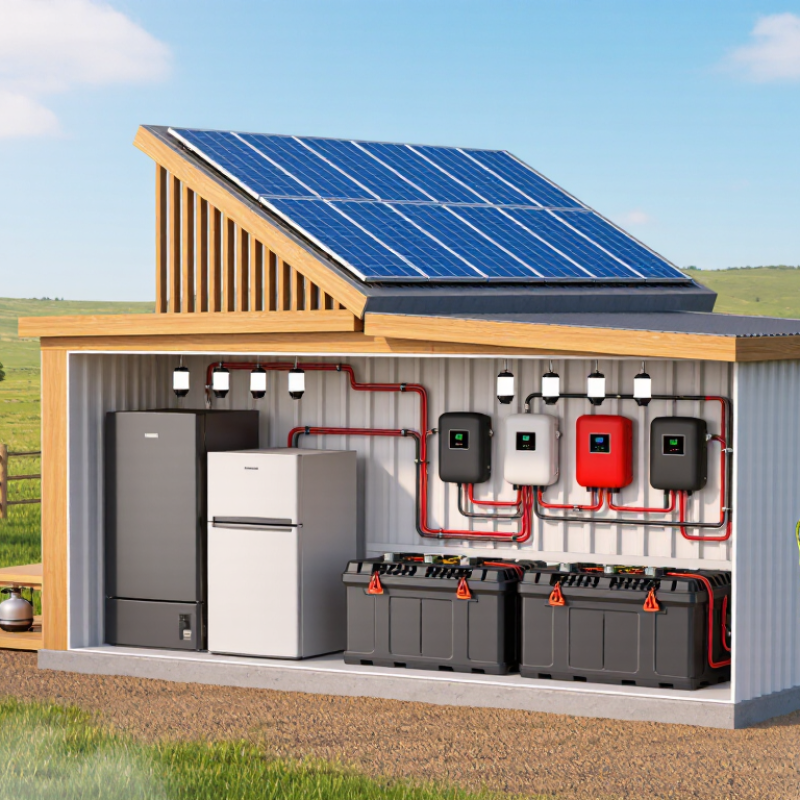
Before choosing an off-grid inverter, record each appliance’s wattage, daily run time, and startup demand. A refrigerator may use modest energy over a day but draw a brief surge when its compressor starts. Add lighting, pumps, communications equipment, and seasonal loads. Separate essential circuits from optional ones. This list is more useful than guessing from the home’s floor area.
Convert daily use into kilowatt-hours, then check the inverter’s continuous output and surge rating against the loads that may run together. The U.S. Energy Information Administration’s 2020 Residential Energy Consumption Survey reported average household electricity use of about 10,715 kWh per year. That is a reference point, not an off-grid target; remote homes and efficient cabins can differ sharply. Size the battery for the autonomy you need, then check that the solar array can replenish it during low-sun periods. Confirm battery voltage, charging limits, and inverter compatibility in the equipment specifications. A spreadsheet helps, but appliance labels and measured usage are better. Estimates can be wrong.
Tips: Measure high-use devices with a plug-in energy meter for several days. Note winter heating and water-pumping needs separately. Leave room for future loads, but avoid oversizing without a clear reason.
How to Choose China Best Solar Inverters for Off Grid Living
Off-grid inverter types differ in how they handle solar input, batteries, and backup power. A standalone inverter converts battery DC into household AC, while a hybrid model can coordinate solar panels, batteries, and a generator or grid connection. An inverter-charger adds battery charging and automatic source switching, useful when cloudy days stretch into a week. Look beyond rated watts: a refrigerator compressor may briefly demand several times its running power. Pure sine-wave output is generally better suited to sensitive electronics and motor-driven appliances.
Efficiency figures need context. NREL’s 2024 Annual Technology Baseline uses about 98% inverter efficiency in utility-scale PV modeling; that benchmark does not guarantee similar performance in an off-grid home, especially at low loads. Check the unit’s efficiency curve, continuous and surge ratings, battery-voltage range, and temperature limits. A dusty equipment shed in summer can expose weaknesses that a showroom test will not. I would also verify idle consumption; it can quietly drain a small battery overnight.
Tips: List your largest appliances and their startup watts. Match inverter surge capacity to those loads, and leave room for future expansion. If you rely on a generator, confirm charging and transfer settings before purchase. Manuals can be vague here. Get the exact battery compatibility and wiring requirements in writing.
When choosing a Chinese inverter for off-grid living, compare the exact model, not just the manufacturer’s reputation. Check continuous output, surge capacity, idle power, and battery compatibility. A kettle or pump can briefly demand more power than its label suggests. Ask for test reports from an independent laboratory, and confirm that the model number matches the product being sold. A polished datasheet is useful, but it cannot show how the unit handles months of heat and dust.
Tips: Request the certification documents before ordering. Check applicable IEC safety standards, warranty terms, and local repair options. Confirm battery communication and charging settings with your battery supplier.
Reliability also depends on installation and support. Review the inverter’s operating-temperature range, enclosure rating, and overload protection. Ask how replacement parts are supplied and whether technical help is available in your time zone. Keep written answers. Small details matter. I would not treat a long warranty as proof of durability; the fine print and service process matter too. Some product pages leave gaps, so verify details directly and allow for uncertainty when comparing options.
How to Choose China Best Solar Inverters for Off Grid Living
Matching inverter specifications to batteries and panels prevents avoidable power losses and shutdowns. Start with the battery’s nominal voltage, chemistry, and permitted charge and discharge current. A 48-volt battery bank, for example, needs an inverter designed for that voltage. Confirm that the inverter’s charging profile suits the battery manufacturer’s requirements. Battery capacity alone is not enough; its maximum continuous output must also support the inverter’s draw.
Next, compare the inverter’s continuous and surge ratings with real loads. A refrigerator may need a brief startup surge, while a kettle draws high power for longer. Check the combined load and leave practical headroom. For solar panels, verify that the array’s open-circuit voltage stays below the inverter’s maximum input, including on cold mornings. Check that operating voltage fits the MPPT range. NREL’s PVWatts documentation uses 96% as a default inverter-efficiency input; it is a modeling assumption, not a promise of field performance. Cables, heat, and partial shading still matter. Real cabins are messier.
Tips: Match battery voltage first. Then check charge-current limits, PV voltage, and surge capacity. Ask for the inverter’s efficiency curve and protection details, not just its peak-efficiency figure. A neat specification sheet can still leave gaps.
| Example Off-Grid Load | Inverter Power Target | Battery Bank Match | Approx. DC Current at Full Output | Example Solar Array | PV Input Checks | Key Matching Considerations |
|---|---|---|---|---|---|---|
| Small cabin: lights, router, refrigerator, and small appliances | 3 kW continuous; check surge rating for motor-starting loads | 48 V nominal LiFePO₄; about 5–10 kWh usable capacity | About 70 A at 48 V, allowing for conversion losses | About 3–4 kW of PV modules | Choose an MPPT voltage range that suits the planned string voltage; verify cold-weather string Voc stays below the inverter’s maximum PV voltage. | Confirm the battery BMS supports the inverter’s continuous and surge current. Check that the inverter’s low-voltage settings suit the battery chemistry. |
| Small home: refrigerator, lighting, computers, and intermittent kitchen appliances | 5 kW continuous; allow extra capacity if several large loads may run together | 48 V nominal LiFePO₄; about 10–15 kWh usable capacity | About 115 A at 48 V, allowing for conversion losses | About 5–6 kW of PV modules | Check the MPPT’s maximum PV input power, operating-voltage range, and input current for each tracker. | Battery discharge capability matters as much as stored energy: use a BMS or parallel battery arrangement rated for the required current. |
| Full-time off-grid home: multiple household circuits and some larger appliances | 8 kW continuous; size for simultaneous demand and appliance startup surges | 48 V nominal LiFePO₄; about 15–25 kWh usable capacity | About 185 A at 48 V, allowing for conversion losses | About 8–10 kW of PV modules, subject to the inverter’s permitted PV input | Confirm total PV power and per-MPPT limits. Design string count and module connections within the specified voltage and current limits. | High DC current may require multiple compatible batteries or a suitably rated battery bank, cables, fuses, and disconnects. |
| High-demand site: larger loads, workshop equipment, or frequent heavy appliance use | 10 kW or more; consider a properly supported parallel inverter system if needed | Typically 48 V nominal LiFePO₄ with capacity and discharge rating selected for the actual load profile | About 230 A at 48 V for 10 kW, allowing for conversion losses | PV array sized to energy use, seasonal sunlight, and the inverter’s PV limits | Check whether multiple MPPT inputs are available and ensure each string stays within its individual voltage and current limits. | Verify parallel operation, battery communication, protection devices, and installation requirements in the inverter documentation. |
Design note: Current figures are approximate, based on 48 V nominal battery voltage and roughly 90% inverter efficiency; actual current varies with battery voltage and operating conditions. PV and battery values are planning examples, not universal specifications. Confirm the exact inverter, module, battery, BMS, and local electrical requirements before purchase or installation.
When comparing China-made solar inverters for off-grid living, look beyond rated power and efficiency. Installation support can determine whether a system starts safely and works as expected. Ask who answers technical questions, which time zone they cover, and whether they can review your battery voltage and load list before shipment. A clear wiring diagram and commissioning checklist are useful. So is help diagnosing an error code when the cabin is far from town.
Tips: Request a sample manual before ordering. Check that it explains grounding, cable sizing, and startup steps in language your installer can follow.
Read warranty terms carefully. Confirm the coverage period, what parts are included, who pays shipping, and where repairs are handled. Ask how long replacement parts typically take to arrive. A long warranty is less reassuring if service stops after the sale. Save written answers, serial numbers, and commissioning records. It is easy to assume support will be simple; remote systems can make small delays feel large. Compare the supplier’s response to a specific technical question, not just its sales promises. No supplier can prevent every fault, but clear escalation steps help you plan for one.
It converts battery DC power into household AC power. It does not manage every power source.
It can coordinate solar panels, batteries, and a generator or grid connection. Check which sources the model supports.
It can charge batteries and switch between power sources automatically. That helps when cloudy weather lasts several days.
Compare continuous and surge ratings with your appliances. A refrigerator compressor may briefly need several times its running power. Surges matter too.
Match the inverter’s voltage to the battery bank. Confirm compatible charging settings and battery charge and discharge limits.
Keep the array’s open-circuit voltage below the inverter’s maximum input, including on cold mornings. Make sure panel voltage fits the MPPT range.
No. Efficiency can change with load, heat, and wiring. Ask for the efficiency curve, not only the peak figure.
Idle power use can drain a small battery overnight. Dust and summer heat can also affect performance. I would verify these details twice; specification sheets can leave gaps.
Choosing the right inverter is essential for reliable off-grid living. How to choose solar inverters for off-grid living begins with understanding your daily energy use, peak loads, and the system’s expected autonomy. Consider whether you need a pure sine wave output, built-in battery charging, or hybrid features, then compare inverter types based on how they handle your household appliances and changing power demands.
Next, check product quality through relevant certifications, clear specifications, and evidence of dependable operation. Match the inverter’s voltage, capacity, and charging settings to your battery bank and solar panels, allowing for future expansion where practical. Before making a decision, confirm that installation guidance, warranty terms, replacement parts, and long-term technical support are available. A well-matched inverter can help improve system performance, protect connected equipment, and provide more consistent power over time.
Stuart Solar