How to Compare Monocrystalline and Polycrystalline Panels

Time:2026-09-18 Author:Liam
0%

Choosing between solar panels involves more than comparing efficiency percentages. Roof size, sunlight, temperature, budget, and installation conditions all affect the final result. A small roof may benefit from higher-efficiency monocrystalline modules. A larger, unobstructed roof may allow more flexibility. The best panel is not always the most expensive one.

What is the difference between monocrystalline and polycrystalline solar panels? Monocrystalline panels usually use higher-purity silicon cells and often provide greater efficiency in a similar footprint. Their dark appearance can suit modern rooftops. Polycrystalline panels traditionally cost less and show a blue, speckled surface. However, manufacturing methods and prices have changed. Older comparisons may no longer describe every product accurately.

Real-world performance depends on the specific model. Check the manufacturer’s datasheet, temperature coefficient, degradation rate, warranty, and independent certification. A panel facing afternoon shade may perform differently from one receiving clear midday sunlight. Dust, ventilation, roof angle, and inverter quality also matter. An experienced installer should measure the roof rather than rely on assumptions.

Small details matter.

This comparison should remain practical, not promotional. Efficiency can influence energy production, but it does not guarantee the quickest payback. A cheaper system may require more roof space or additional labor. A premium system may still be unsuitable for a shaded roof. Even expert recommendations deserve review, because local electricity prices and installer quality can change the calculation. Examine the numbers, question broad claims, and choose equipment supported by transparent evidence.
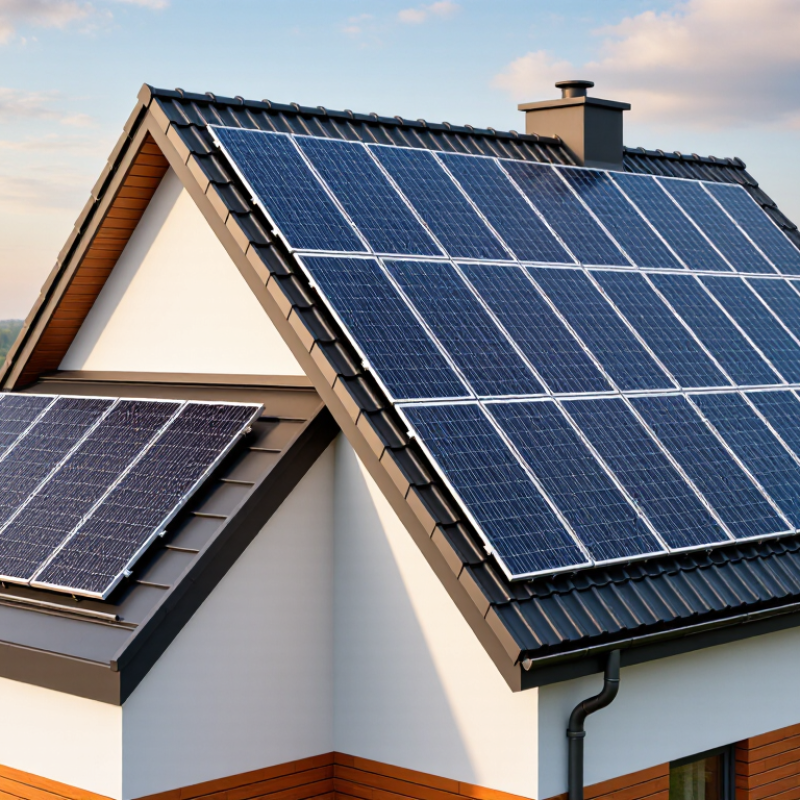
How to Compare Monocrystalline and Polycrystalline Panels

Define the Cell Technologies: Mono PERC, TOPCon, and Polycrystalline Silicon

Comparing panels begins with understanding their cell technology. Monocrystalline PERC cells use a single silicon crystal and a passivated rear surface. This design reduces electron loss and supports strong conversion efficiency. TOPCon cells add an ultra-thin tunnel oxide and passivated contact layer. They can achieve higher efficiency and lower degradation than standard PERC cells. Polycrystalline silicon cells use multiple crystal fragments melted together. Their manufacturing process is simpler, but their efficiency is usually lower.

In a rooftop assessment, mono panels often produce more power within limited space. That matters when roof area is small or partly shaded. TOPCon can perform well in hot conditions and during weaker sunlight. However, its real advantage depends on installation quality, ventilation, and the inverter. Polycrystalline panels may suit larger roofs where upfront cost matters more than maximum output. Their blue, grain-like appearance is also easy to recognize. Small details matter.

Do not judge by efficiency alone. Check the temperature coefficient, product warranty, power tolerance, and expected annual degradation. A higher rated panel can still underperform with poor orientation or heavy dust. I have seen estimates change after accounting for afternoon shade. That part is often overlooked. Technology labels also simplify reality; cell quality and system design can matter as much as the cell type. A careful comparison should use local weather data, roof measurements, and realistic production estimates. Perfect predictions are impossible. Practical evidence is better than confident assumptions.

Compare Module Efficiency: Mono 20–24% vs Poly 15–18% in Industry Data

Comparing monocrystalline and polycrystalline panels starts with module efficiency. Industry data commonly places monocrystalline modules around 20–24%. Polycrystalline modules usually fall near 15–18%. These ranges align with figures discussed in the Fraunhofer ISE Photovoltaics Report 2024 and IEA PVPS Trends 2024.

The difference matters when roof space is limited. A 10-square-metre roof may produce more rated capacity with mono modules. Their darker cells also create a more uniform appearance. Poly panels can require additional surface area for the same output. That may increase mounting work, cable length, and installation complexity. Still, efficiency is not the whole result. Temperature, shading, tilt, dust, and inverter matching can reduce actual energy production.

On a hot rooftop, module temperature may exceed 60°C. Power then falls below the laboratory rating. This is easy to overlook. I have seen comparisons focus too heavily on the nameplate percentage. A carefully positioned poly system may outperform a poorly ventilated mono array. The better choice depends on available space, local sunlight, system cost, and expected operating conditions. Fraunhofer’s reports also show continuing improvements in commercial crystalline-silicon technology, so older polycrystalline figures may not represent every remaining product. That point deserves checking. Always compare current datasheets, temperature coefficients, degradation rates, and measured performance rather than efficiency alone.

Measure Energy Yield Using NREL’s 0.5% Annual Degradation Benchmark

Comparing monocrystalline and polycrystalline panels requires more than reading their rated wattage. Measure energy yield in kilowatt-hours per installed kilowatt, or kWh/kWp. Keep tilt, azimuth, shading, inverter settings, and cleaning schedules consistent. A higher initial output can look attractive, but long-term performance needs a separate calculation.

NREL’s commonly cited 0.5% annual degradation benchmark offers a practical reference point. Using this assumption, a panel producing 1,000 kWh in its first year would produce about 995 kWh in year two. After 25 years, the estimate becomes roughly 882 kWh under identical conditions.

The formula is simple: first-year yield × 0.995 raised to the number of years.

Apply it separately to both technologies, using measured first-year data rather than brochure ratings.

Field evidence still matters. Record monthly production, plane-of-array sunlight, module temperature, and downtime. A spreadsheet can reveal whether a small difference survives cloudy winters or high summer heat.

My first comparison focused too heavily on nameplate power. That was incomplete. Polycrystalline panels may remain competitive where installation space is generous, while monocrystalline panels can deliver more energy from a smaller roof area.

However, the 0.5% figure is a benchmark, not a promise. Dust, humidity, thermal cycling, and installation defects may change the result. Include an uncertainty range, and revisit the model when real production data becomes available.

Assess Space, Temperature Coefficients, and Installation Requirements

How to Compare Monocrystalline and Polycrystalline Panels

Assess the roof before comparing efficiency figures. Monocrystalline panels usually produce more power per square metre, which helps on small roofs or homes with limited sunny space. Polycrystalline panels often need a larger array for the same output. Measure usable roof areas around vents, skylights, and fire-access pathways. A simple roof sketch can prevent expensive redesigns.

Temperature coefficients deserve careful attention. Panel voltage and power decline as cell temperature rises, often near 25°C and above. Compare the power temperature coefficient in each technical datasheet. A less negative percentage may perform better during hot afternoons. Leave airflow beneath the panels, especially over dark roofing. Hot air trapped under a tight installation reduces practical output. It sounds minor.

Installation requirements can change the decision. Check panel dimensions, weight, mounting points, roof angle, and local wind or snow loads. Larger panels may reduce rail sections but create awkward handling near roof edges. Electrical designers should also verify open-circuit voltage during cold weather. Incorrect string sizing can damage equipment or reduce system performance. Professional site measurements matter more than brochure claims.

A high-efficiency panel is not automatically the best choice. Shading, roof orientation, cable routes, and available labour can outweigh small efficiency differences. One overlooked chimney can change the calculation. Recheck the plan after an on-site inspection, because a clean spreadsheet may still describe the wrong roof.

Compare Costs and Life-Cycle Impacts Using IRENA and IEC Data

Monocrystalline panels usually deliver more power from the same roof area. That advantage can reduce mounting, wiring, and land requirements. Polycrystalline panels historically offered lower module prices, but the gap has narrowed as manufacturing has changed. Area matters.

IRENA reported a global, utility-scale solar PV LCOE of about USD 0.044 per kilowatt-hour in 2023. However, this figure covers complete projects, not one cell type. A fair comparison should include module price, efficiency, inverter sizing, installation labor, and expected yield. In a small rooftop assessment, higher-efficiency monocrystalline panels may recover their premium through better space use. Yet a large, unshaded roof can make polycrystalline economics more attractive. Results vary.

For life-cycle impacts, IRENA’s end-of-life analysis estimated that cumulative PV waste could reach 60–78 million tonnes by 2050. Both technologies contain valuable glass, aluminum, and silicon, although recovery depends on panel design and recycling systems. IEC 61215 and IEC 61730 provide qualification and safety testing frameworks; they do not certify a panel’s total carbon footprint. That distinction is important. Manufacturing electricity, transport distance, service life, and degradation often influence emissions more than the mono-versus-poly label. IRENA’s cost data supports careful comparison, not a universal winner. Some assumptions still need challenging.

How to Compare Monocrystalline and Polycrystalline Panels

Cost and modeled life-cycle performance using IRENA cost data and IEC qualification references

Interpretation: IRENA reported a global weighted-average utility-scale solar PV installed cost of approximately US$758/kW in 2023. IRENA does not publish a separate global cost split for monocrystalline and polycrystalline modules, so the same benchmark is shown for both technologies.

The life-cycle index is modeled for a fixed installation area using representative module efficiencies of 21% for monocrystalline and 17% for polycrystalline. With the same operating period and degradation assumption, higher efficiency produces more lifetime electricity per square metre and reduces land-use intensity per kilowatt-hour.

IEC 61215 covers design qualification and type approval for terrestrial PV modules, while IEC 61730 addresses module safety. These standards are qualification requirements rather than technology-specific cost or carbon-footprint measurements.

Sources: International Renewable Energy Agency (IRENA), Renewable Power Generation Costs in 2023; IEC 61215 and IEC 61730 photovoltaic module standards. The life-cycle values are normalized model outputs, not manufacturer-specific claims.

FAQS

What are the main differences between mono PERC, TOPCon, and polycrystalline cells?

Mono PERC uses one silicon crystal and a passivated rear surface. TOPCon adds a thin tunnel oxide and passivated contact layer. Polycrystalline cells combine several crystal fragments. They usually cost less but deliver lower efficiency.

Which technology suits a small or partly shaded roof?

Monocrystalline panels usually suit limited roof space. They can produce more power within the same area. Shading still matters greatly. An afternoon shadow may change the estimate.

What efficiency ranges are commonly seen?

Monocrystalline modules commonly reach about 20–24% efficiency. Polycrystalline modules often range from 15–18%. These figures vary by product, age, and testing conditions.

Does higher efficiency always mean better real-world performance?

No. A poorly oriented panel can underperform a carefully installed lower-efficiency panel. Roof angle, ventilation, dust, shading, and inverter matching affect actual output. Efficiency is only one piece.

How does high temperature affect panel output?

Rooftop temperatures can exceed 60°C on hot days. Power then falls below the laboratory rating. A strong temperature coefficient helps reduce this loss. Heat is easy to underestimate.

How should long-term energy yield be compared?

Compare kilowatt-hours per installed kilowatt, not only rated wattage. Keep tilt, direction, shading, cleaning, and inverter settings consistent. Record monthly production and compare it with sunlight data.

What does a 0.5% annual degradation assumption show?

A panel producing 1,000 kilowatt-hours initially may produce about 995 kilowatt-hours the next year. After 25 years, the estimate becomes roughly 882 kilowatt-hours. This is a benchmark, not a guarantee.

When can polycrystalline panels remain a practical choice?

They may suit larger roofs where initial cost matters most. Their blue, grain-like appearance is easy to recognize. Extra space may offset their lower efficiency. That trade-off deserves careful checking.

What information should be reviewed before choosing a panel type?

Check current efficiency, temperature coefficient, warranty, power tolerance, and degradation rate. Measure roof dimensions and review local weather patterns. Include installation quality and ventilation. Perfect predictions are impossible.

Conclusion

What is the difference between monocrystalline and polycrystalline solar panels? The main distinction lies in their cell structure and manufacturing process. Monocrystalline technologies, including PERC and TOPCon, are made from higher-purity silicon and generally achieve module efficiencies of about 20–24%. Polycrystalline silicon panels typically provide efficiencies of around 15–18%. As a result, monocrystalline modules usually generate more electricity in limited spaces, while polycrystalline systems may offer a simpler cost profile where installation area is not a major constraint.

A complete comparison should also consider real-world energy yield rather than efficiency alone. Applying a typical annual degradation benchmark of approximately 0.5% helps estimate long-term performance. Temperature coefficients, available roof space, mounting requirements, wiring, and installation conditions can further affect output. Finally, evaluating upfront costs alongside manufacturing impacts, operating life, recyclability, and life-cycle emissions provides a more balanced assessment. The best choice depends on site conditions, energy goals, budget, and the importance placed on long-term environmental performance.

Liam

Liam

Liam is a dedicated marketing professional with a profound expertise in the industry, where he excels at highlighting the unique advantages of our core products. With a keen understanding of market trends and consumer needs, Liam frequently updates our company’s professional blog, providing......