Choosing an inverter for a commercial solar system is not simply a matter of comparing prices. The right model must match the site’s load profile, roof conditions, grid requirements, and future expansion plans. A warehouse with heavy daytime demand may need a different design from an office building with strong evening consumption. How to choose solar inverters for commercial solar projects depends on these practical details.
Experienced project teams begin with reliable operating data. They review peak demand, voltage conditions, shading patterns, ambient temperature, and available maintenance access. They also compare string, central, and modular inverter architectures. Each option affects installation time, redundancy, monitoring, and repair costs. Details matter.
Efficiency ratings deserve attention, but they should not dominate the decision. An inverter can show excellent laboratory performance and still struggle in a hot plant room. Thermal management, MPPT range, overload capacity, and protection features influence real-world output. Small errors compound.
Commercial buyers should verify certifications, local grid compliance, warranty terms, and the manufacturer’s service network. Independent testing and documented performance history provide stronger evidence than promotional claims. A five-year warranty may sound attractive, yet response times and replacement procedures can matter more during a production loss.
This guide presents five practical tips for evaluating commercial solar inverters. It considers technical fit, lifecycle value, safety, monitoring, and operational reliability. No checklist replaces professional engineering. Site conditions can challenge even a careful design. The goal is not to find the most powerful inverter, but the most dependable match for the project’s actual needs.
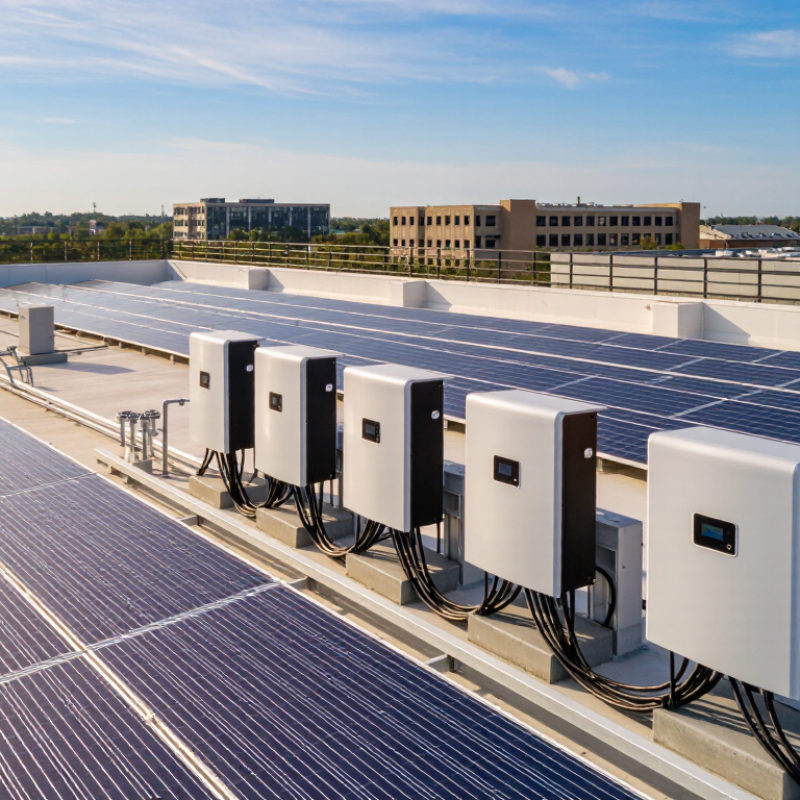
Choosing a commercial solar inverter starts with understanding how your facility uses electricity. Review twelve months of utility bills, not just the monthly total. Look for peak demand, daytime consumption, seasonal changes, and unusual production periods. A warehouse may need steady daytime power, while a restaurant can reach its highest load after sunset. That difference affects inverter capacity and battery planning.
Measure the site’s electrical conditions carefully. Record the service voltage, phase arrangement, available connection capacity, and critical equipment loads. Motors, refrigeration systems, pumps, and compressors can create short starting surges. An inverter sized only for average demand may struggle during these events. Check local interconnection rules and required protection settings with a qualified electrical professional.
Plan for the physical solar array as well. Roof sections may face different directions, receive partial shade, or require separate tracking inputs. Count the planned panels and compare their voltage range with the inverter’s operating limits. Leave room for future expansion, but avoid paying for unused capacity today. This balance is easy to misjudge.
Real projects often reveal gaps in early estimates. A facility may add machinery or change operating hours within a year. Ask for interval meter data when possible, then test your assumptions against actual equipment schedules. Include monitoring, service access, ventilation, and fault response in the requirement list. Efficiency matters, but reliable operation matters more.
Commercial solar projects need inverters that match the array, grid, and operating environment. String inverters suit uniform roofs with limited shading, while central inverters can reduce equipment costs on large, open sites. Microinverters support panel-level monitoring and complex roof designs, but they increase equipment count. The IEA PVPS Trends 2024 report recorded 456 GW of new solar capacity worldwide in 2023. That scale makes compatibility more important, not less. Check maximum DC voltage, MPPT voltage range, current limits, and three-phase output before comparing efficiency figures. A high efficiency rating cannot fix an incorrect voltage match.
Battery integration also changes the decision. Some commercial systems need hybrid inverters, while others use separate battery converters and standard PV inverters. Confirm communication protocols, backup operation, export limits, and local grid-code settings. NREL’s 2024 Annual Technology Baseline shows continuing cost reductions across solar and storage technologies, but installation and replacement costs still affect project returns. Thermal cycling, dust, ventilation, and service access deserve equal attention. Field engineers often discover that a shaded rooftop performs poorly with one large tracking window. Panel-level power electronics may help there. Yet more devices can mean more inspection points. That trade-off is easy to underestimate. A careful compatibility table is usually more valuable than a dramatic efficiency claim. (Sources: IEA PVPS Trends 2024; NREL Annual Technology Baseline 2024.)
Efficiency should be judged beyond the headline number. The IEA PVPS Task 13 reports that modern inverters can exceed 98% peak efficiency. However, warehouses often operate below peak load for hours. Check European or California efficiency ratings, partial-load curves, and night-time consumption. Small losses repeat every day. A 1% conversion gap can become significant across a large commercial array.
Capacity must match the site’s operating pattern, not only its panel total. Compare DC-to-AC ratios, clipping limits, maximum input current, and voltage windows. NREL’s PVWatts guidance shows that system losses depend on temperature, wiring, inverter operation, and shading. Leave practical headroom for cloudy mornings and future expansion. Oversizing may reduce costs, but excessive oversizing can increase clipping and heat stress. Load matters.
Performance ratings need physical context. Review operating temperature ranges, humidity tolerance, fault protection, and acoustic output near offices. The IEA PVPS reports that inverter reliability and replacement planning remain important operational concerns. Ask for tested efficiency, not marketing language. During commissioning, record voltage, current, temperatures, and power at several load levels. A perfect datasheet is not a perfect project. I have seen monitoring assumptions hide avoidable losses. Also check warranty terms, service response, spare-unit strategy, and grid-support functions before approval.
Tip 1: Check safety features before comparing efficiency figures. Look for anti-islanding protection, surge protection, ground-fault detection, and clear emergency shutdown procedures. These features matter when technicians work beside live equipment. A qualified electrician should confirm local installation requirements.
Tip 2: Review the monitoring system in practical detail. It should show inverter status, energy production, temperature, fault codes, and voltage trends. Alerts should reach the responsible maintenance team quickly, not sit unnoticed on a dashboard. Tip 3: Ask how data is protected. Strong passwords, access controls, secure updates, and clear data ownership reduce operational risks. In my experience, monitoring is often installed but poorly configured. That weakness can delay repairs.
Tip 4: Confirm grid compliance before ordering equipment. Check voltage and frequency ranges, anti-islanding behavior, power-factor control, and reactive-power settings. The utility may require approval, testing records, or specific export controls. Requirements vary by location and project size. Tip 5: Request complete commissioning documents and service procedures. Records should include test results, protection settings, firmware versions, and maintenance intervals. A system can appear reliable during a short inspection, yet perform poorly under heat or unstable grid conditions. Recheck assumptions. They are not always correct.
Check safety features, monitoring functions, grid compliance, serviceability, and lifecycle documentation before approving a commercial inverter.
How to use this checklist
The chart counts the key verification points in a practical commercial procurement checklist. Confirm electrical safety against applicable IEC 62109 or IEC 62477 requirements, verify monitoring for inverter and plant-level operation, and check local grid-code requirements such as anti-islanding, voltage and frequency response, and reactive-power control. Final requirements depend on the project jurisdiction and utility connection agreement.
A commercial inverter should support predictable operations, not just impressive efficiency figures. Check the warranty period, coverage limits, and exclusions carefully. Some warranties cover parts but exclude labor, shipping, or site visits. Ask who handles repairs when a unit fails during peak production. A clear response-time commitment can protect revenue better than a longer warranty alone.
Inspect whether technicians can access filters, cooling fans, terminals, and monitoring hardware safely. Ask about recommended inspections, firmware updates, and replacement parts. A dusty warehouse roof may demand more attention than a clean office installation. Small service tasks can become expensive when access equipment or specialist labor is required.
Compare expected efficiency, standby consumption, failure rates, and service costs over the inverter’s planned life. Request documented performance testing and references from comparable commercial sites. Independent certification and transparent technical records add credibility. Yet projections are never perfect. Weather, grid conditions, and installation quality can change results.
Useful alerts should identify overheating, communication loss, and unusual power drops before they become costly failures. Confirm that your team can export operating data without restrictive software terms. Also examine replacement compatibility, recycling arrangements, and future expansion options. The cheapest purchase may create higher costs after year five. I have seen maintenance assumptions look reasonable on paper, then fail because no local technician was available. That detail deserves more attention.
Review twelve months of utility bills. Check peak demand, daytime use, seasonal changes, and unusual production periods. Monthly totals alone can mislead.
A warehouse may use power steadily during daylight. A restaurant may peak after sunset. These patterns influence inverter capacity and battery planning.
Record service voltage, phase arrangement, connection capacity, and critical equipment loads. Motors, pumps, compressors, and refrigeration may create short starting surges.
Not always. Starting surges can exceed average demand for several seconds. This estimate may be wrong without equipment-level measurements.
Roof sections may face different directions or receive partial shade. Separate tracking inputs may improve performance. Shade changes the design.
Compare panel voltage ranges with the inverter’s operating limits. Check maximum DC voltage, current limits, and tracking voltage ranges. Never rely on efficiency alone.
String inverters suit uniform roofs with limited shading. Central inverters may suit large, open sites. Panel-level units can help with complex or shaded roofs.
Confirm hybrid or separate converter compatibility. Check communication protocols, backup operation, export limits, and local grid settings. Battery planning adds complexity.
Leave reasonable room for expansion, but avoid paying for unused capacity today. Future machinery or longer operating hours may change the estimate.
Include monitoring, ventilation, service access, dust protection, and fault response. Reliable operation matters more than a dramatic efficiency figure. Service access is often forgotten.
Choosing the right inverter is essential for building a reliable and cost-effective commercial solar system. This guide explains How to choose solar inverters for commercial solar projects by first defining energy demand, site conditions, system size, and future expansion plans. It then compares suitable inverter types, including their compatibility with the solar array, battery storage, wiring design, and grid connection requirements.
The article also highlights the importance of reviewing efficiency, power capacity, performance under changing conditions, and expected energy output. Safety protections, remote monitoring, communication functions, and compliance with local grid standards should be carefully evaluated before installation. Finally, businesses should consider warranty coverage, maintenance requirements, replacement support, and total long-term value rather than focusing only on the initial purchase price. A well-selected inverter can improve system performance, simplify operations, reduce downtime, and support dependable solar energy production for many years.

Stuart Solar